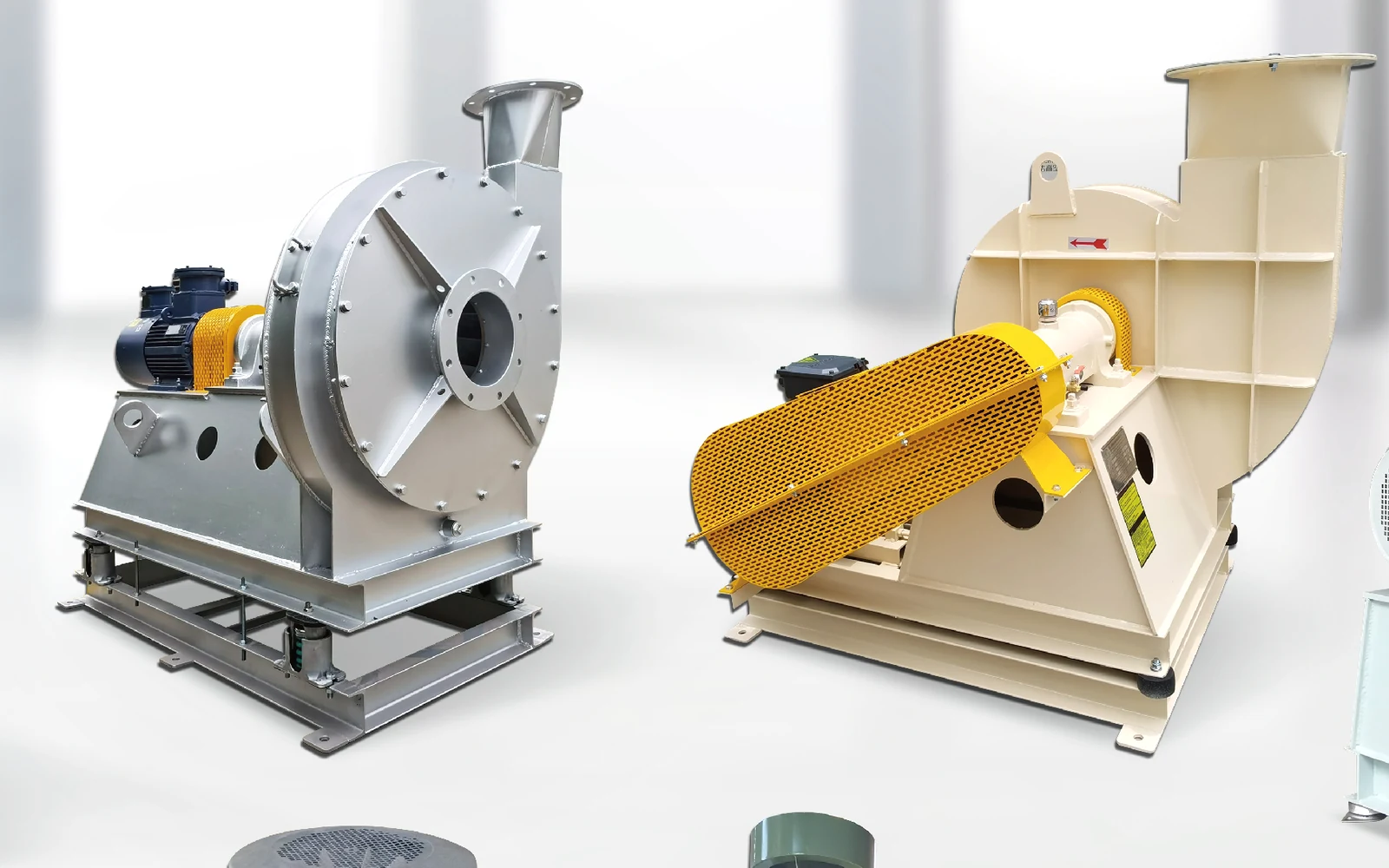
BEST industrial centrifugal fan showing casing, inlet and drive arrangement

Fan Technology

Industrial fan knowledge for better project decisions.

A practical guide to the information that shapes fan selection, performance, construction and stable operation.

Good fan selection begins with a complete operating picture.

Airflow and pressure establish the duty point, but reliable industrial-fan selection also depends on gas density, temperature, composition, dust loading, operating schedule, control range and installation conditions.

This knowledge centre explains the engineering inputs BEST uses during project review. It is a guide for preparing requirements; final performance remains subject to a project-specific technical selection.

Selection fundamentals

Six inputs behind the duty point.

Use these topics to prepare a new-project inquiry or to review why an installed fan is not operating as expected.

01

Airflow

Volume flow describes how much gas the fan must move. State the value, unit and whether it refers to actual or standard conditions.
02

Pressure

Static or total pressure must overcome the resistance of ducts, filters, dampers, process equipment and outlets.

03

Operating point

The real operating point is where the fan curve and system resistance curve intersect. Both are needed for reliable selection.

04

Gas density

Temperature, altitude and gas composition change density, which affects pressure and absorbed power.

05

Control range

A variable-frequency drive, damper or process change can move the operating point. Minimum and maximum duty should be defined.

06

Efficiency & power

Efficiency and motor power are confirmed for the selected fan, gas density and control condition — not from airflow alone.

Performance relationships

How flow, pressure and power respond to speed.

The fan-law chart is an engineering reference for the same fan at constant diameter and gas density. It does not replace the selected fan curve.

01

Published selection envelope

Overall range published by BEST for custom industrial fan projects.

Airflow: 500–500,000 m³/hPressure: 500–20,000 Pa
02

Fan-law reference

Illustrative relationship at constant impeller diameter and gas density.

Q₂/Q₁ = n₂/n₁Δp₂/Δp₁ = (n₂/n₁)²P₂/P₁ = (n₂/n₁)³

Special operating conditions

Information that changes construction.

Provide the normal condition, worst credible condition and the standards or certification basis required by the project.

01

High temperature

Provide normal, maximum and upset temperatures, exposure duration and thermal cycling.

02

Dust & abrasion

Provide particle type, size, loading and whether material may adhere, accumulate or erode the impeller.

03

Corrosive gas

Provide gas composition, concentration, moisture and possible condensation so material compatibility can be reviewed.

04

Explosion protection

Provide the hazardous-area classification, gas or dust group, temperature class and certification basis required.

05

Leakage-sensitive duty

Define the allowable leakage direction and limit, plus any shaft-seal or casing test requirement.

06

Noise & vibration

State site limits, measurement locations, foundation conditions and any acoustic enclosure or monitoring requirement.

Technical consulting

Have a duty point or an operating problem?

Send the technical details